
Rotator Cuff Tear
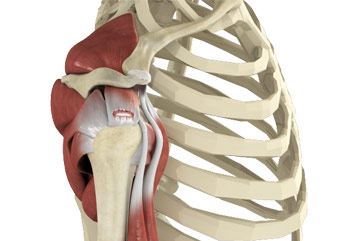
Rotator cuff is the group of tendons in the shoulder joint providing support and enabling wider range of motion. Major injury to these tendons may result in tear of these tendons and the condition is called as rotator cuff tear. It is one of the most common causes of shoulder pain in middle aged adults and older individuals.
Causes
Rotator cuff tear results from pressure on the rotator cuff from part of the shoulder blade (scapula) as the arm is lifted. It may occur with repeated use of arm for overhead activities, while playing sports or during motor accidents.
Symptoms
Rotator cuff tear causes severe pain, weakness of the arm, and crackling sensation on moving shoulder in certain positions. There may be stiffness, swelling, loss of movements, and tenderness in the front of the shoulder.
Diagnosis
Your surgeon diagnoses Rotator Cuff Tear based on the physical examination, X-rays, and imaging studies, such as MRI. Rotator cuff tear is best viewed on magnetic resonance imaging.
Conservative Treatment Options
- Rest
- Shoulder sling
- Pain medication Injection of a steroid (cortisone) and a Local anaesthetic in the subacromial space of the affected shoulder to help decrease the inflammation and pain
- Certain Exercises
Surgery
Rotator cuff repair may be performed by open surgery or arthroscopic procedure. In arthroscopy procedure space for rotator cuff tendons will be increased and the cuff tear is repaired using suture anchors. These anchor sutures help in attaching the tendons to the shoulder bone. Following the surgery, you may be advised to practice motion and strengthening exercises.
Disclaimer: Following video links are for demonstration purposes and for understanding of the basic idea and concept of the procedure. The actual procedure may differ and may not be the same. This website does not take any responsibility for authenticity of videos.
Please go through the benefits, risks and rehabilitation of the procedure fully before consenting. Some of these are explained in shoulder surgery protocols under patient info tab.
A RAISED RISK OF ALL-CAUSE MORTALITY HAS BEEN SEEN IN A STUDY OF NEW USERS OF PRESCRIPTION OPIOIDS FOR NONCANCER PAIN.
The study of 1,066,216 UK, US and Canadian patients found a mortality risk six to 12 times higher for those on morphine compared with codeine.1
Strong opioids including morphine, fentanyl, buprenorphine, oxycodone, and combination opioids, and those on higher morphine doses, had a higher risk of all-cause mortality.This study found that the risks of serious harms increases on stronger opioids and especially for those people on doses of 50 or more morphine milligram equivalents per day.
In the UK, those given morphine had 12.6 times the likelihood of all-cause mortality than those given codeine.
In particular, the use of antipsychotics plus opioids was consistently associated with a higher risk of mortality in both the US and UK cohorts in this study
Meghnaa J, Nadyne G, et al. Comparative risk of mortality in new users of prescription opioids for noncancer pain: results from the International Pharmacosurveillance Study. Pain Online 2024 ():10.1097/j.pain.0000000000003446, October 29, 2024. | DOI: 10.1097/j.pain.0000000000003446
Rotator Cuff Repair with Surgery: 15-Year Outlook
Randomized Control Trial: JBJS American . 2024 Oct 2;106(19):1785-1796. doi: 10.2106/JBJS.24.00065.
Fifteen-Year Results of a Comparative Analysis of Tendon Repair Versus Physiotherapy for Small-to-Medium-Sized Rotator Cuff Tears: A Concise Follow-up of Previous Reports.
S Moosmayer [1] , G Lund [2] et al : PMID: 39197154 : PMCID: PMC11594065 : [3] DOI: 10.2106/JBJS.24.00065 [4]
After 15 years, rotator cuff repair generally shows durable, significantly improved function and reduced pain compared to pre-surgery, with many patients doing well, though some face issues like stiffness, re-tears, or arthritis, with success often linked to initial tear size and patient factors. Study confirm long-term satisfaction, but highlight that while most repairs stay intact, factors like older age, larger tears, and female sex can predict lower scores or need for revision surgery, with primary repair often superior to physiotherapy alone for long-term results.
Positive Long-Term Outcomes
- Long-Term Pain Relief: Most patients maintain significant pain
reduction and improved shoulder function for 15+ years [2, 3]. * High Satisfaction: Approximately 85-90% of patients report being satisfied with their results a decade and a half after surgery [1, 4]. * Structural vs. Functional Success: While some shoulders may develop “re-tears” or wear over 15 years, many patients do not feel a difference and continue to function well regardless of what an MRI might show [3, 4]. * The “5-Year” Rule: If your shoulder is stable and functional 5 years after surgery, it is highly likely to remain that way at the 15-year mark [2]. * Revision is Rare: Very few patients (typically less than 10%) require a second “redo” surgery within this 15-year window [4].
Factors Influencing my Results
- Tear Size Matters: Smaller initial tears are linked to better
long-term outcomes. * Age & Sex: Older age and female sex can be associated with lower scores (SAS, PROMIS-UE) and potentially worse results. * SMOKING / VAPING / Alcohol excess- If patient stops vaping/ smoking prior to operation , it leads to better outcomes. Smoking/ vaping/ Alcohol excess history leads to adverse outcomes. * Co-morbidities: More medical issues and Alcohol excess can lead to worse long-term outcomes.
Potential Long-Term Issues
- Re-tears & Failure: Some repairs fail to heal or re-tear, especially
patients with severe initial tears, who Vape or smoke , alcohol excess, significant comorbidities, though satisfactory results are still possible. * Ongoing Problems: Stiffness, weakness, ongoing pain, and eventual arthritis can still develop.
Key Message: Surgery provides lasting improvements in quality of life for most patients; success isn’t guaranteed for everyone. While the shoulder ages naturally, the functional benefits of the initial repair remain largely intact for most patients.
Actionable Resources:
* Review recovery expectations via the AAOS Patient Education Portal.