
Shoulder Pain
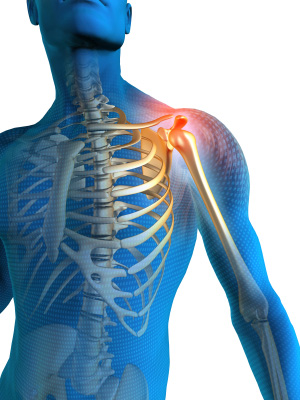
Pain in the shoulder suggests a shoulder injury which is more common in athletes participating in sports such as swimming, tennis, pitching and weightlifting. The injuries are caused due to the over usage or repetitive motion of the arms.
In addition to pain, shoulder injuries also cause stiffness, restricted movements, difficulty in performing routine activities and popping sensation.
Some of the common shoulder injuries that cause pain and restrict the movement of shoulders, include sprains and strains, dislocations, tendinitis, bursitis, rotator cuff injury, fractures and arthritis.
- Sprains and strains: A sprain is stretching or tearing of ligaments (tissues that connect adjacent bones in a joint). It is a common injury and usually occurs when you fall or suddenly twist. A strain is stretching or tearing of muscle or tendon (tissues that connect muscle to bone). It is common in people participating in sports. Strains are usually caused by twisting or pulling of the tendons.
- Dislocations: A shoulder dislocation is an injury that occurs when the end of the bone is forced out of its position. It is often caused by a fall or direct blow to the joint while playing contact sport.
- Tendinitis: It is an inflammation of a tendon, a tissue that connect muscles to bone. It occurs because of injury or overuse.
- Bursitis: It is an inflammation of a fluid-filled sac called bursa that protects and cushions your joints. Bursitis can be caused by chronic overuse, injury, arthritis, gout or infection.
- Rotator cuff injury: The rotator cuff consists of tendons and muscles that hold the bones of the shoulder joint together. Rotator cuff muscles allow you to move your arm up and down. Rotator cuff injuries often cause a decreased range of motion.
- Fractures: A fracture is a break in the bone that commonly occurs because of injury, such as a fall or a direct blow to the shoulder.
- Arthritis: Osteoarthritis is the most common type of shoulder arthritis, characterized by progressive wearing away of the cartilage of the joint.
Early treatment is necessary to prevent serious shoulder injuries. The immediate mode of treatment recommended for shoulder injuries is rest, ice, compression and elevation (RICE). Your doctor may also prescribe anti-inflammatory medications to help reduce the swelling and pain.
Your doctor may recommend certain exercises to prevent stiffness and improve range of motion and strength. Passive manipulation and massage therapy to improve blood circulation and healing are also administered. Other techniques such as acupuncture, TENS, and ultrasound therapy may additionally be recommended.
A RAISED RISK OF ALL-CAUSE MORTALITY HAS BEEN SEEN IN A STUDY OF NEW USERS OF PRESCRIPTION OPIOIDS FOR NONCANCER PAIN.
The study of 1,066,216 UK, US and Canadian patients found a mortality risk six to 12 times higher for those on morphine compared with codeine.1
Strong opioids including morphine, fentanyl, buprenorphine, oxycodone, and combination opioids, and those on higher morphine doses, had a higher risk of all-cause mortality.This study found that the risks of serious harms increases on stronger opioids and especially for those people on doses of 50 or more morphine milligram equivalents per day.
In the UK, those given morphine had 12.6 times the likelihood of all-cause mortality than those given codeine.
In particular, the use of antipsychotics plus opioids was consistently associated with a higher risk of mortality in both the US and UK cohorts in this study
Meghnaa J, Nadyne G, et al. Comparative risk of mortality in new users of prescription opioids for noncancer pain: results from the International Pharmacosurveillance Study. Pain Online 2024 ():10.1097/j.pain.0000000000003446, October 29, 2024. | DOI: 10.1097/j.pain.0000000000003446
Rotator Cuff Repair with Surgery: 15-Year Outlook
Randomized Control Trial: JBJS American . 2024 Oct 2;106(19):1785-1796. doi: 10.2106/JBJS.24.00065.
Fifteen-Year Results of a Comparative Analysis of Tendon Repair Versus Physiotherapy for Small-to-Medium-Sized Rotator Cuff Tears: A Concise Follow-up of Previous Reports.
S Moosmayer [1] , G Lund [2] et al : PMID: 39197154 : PMCID: PMC11594065 : [3] DOI: 10.2106/JBJS.24.00065 [4]
After 15 years, rotator cuff repair generally shows durable, significantly improved function and reduced pain compared to pre-surgery, with many patients doing well, though some face issues like stiffness, re-tears, or arthritis, with success often linked to initial tear size and patient factors. Study confirm long-term satisfaction, but highlight that while most repairs stay intact, factors like older age, larger tears, and female sex can predict lower scores or need for revision surgery, with primary repair often superior to physiotherapy alone for long-term results.
Positive Long-Term Outcomes
- Long-Term Pain Relief: Most patients maintain significant pain
reduction and improved shoulder function for 15+ years [2, 3]. * High Satisfaction: Approximately 85-90% of patients report being satisfied with their results a decade and a half after surgery [1, 4]. * Structural vs. Functional Success: While some shoulders may develop “re-tears” or wear over 15 years, many patients do not feel a difference and continue to function well regardless of what an MRI might show [3, 4]. * The “5-Year” Rule: If your shoulder is stable and functional 5 years after surgery, it is highly likely to remain that way at the 15-year mark [2]. * Revision is Rare: Very few patients (typically less than 10%) require a second “redo” surgery within this 15-year window [4].
Factors Influencing my Results
- Tear Size Matters: Smaller initial tears are linked to better
long-term outcomes. * Age & Sex: Older age and female sex can be associated with lower scores (SAS, PROMIS-UE) and potentially worse results. * SMOKING / VAPING / Alcohol excess- If patient stops vaping/ smoking prior to operation , it leads to better outcomes. Smoking/ vaping/ Alcohol excess history leads to adverse outcomes. * Co-morbidities: More medical issues and Alcohol excess can lead to worse long-term outcomes.
Potential Long-Term Issues
- Re-tears & Failure: Some repairs fail to heal or re-tear, especially
patients with severe initial tears, who Vape or smoke , alcohol excess, significant comorbidities, though satisfactory results are still possible. * Ongoing Problems: Stiffness, weakness, ongoing pain, and eventual arthritis can still develop.
Key Message: Surgery provides lasting improvements in quality of life for most patients; success isn’t guaranteed for everyone. While the shoulder ages naturally, the functional benefits of the initial repair remain largely intact for most patients.
Actionable Resources:
* Review recovery expectations via the AAOS Patient Education Portal.